What Parts Do You Need to Build a Custom Lightsaber?
This is where many beginners get stuck. People think constructing a bespoke lightsaber is choosing a color and declaring victory. It's not. Before spending a dime, you must understand the hilt, blade, color and lighting effects, and sound and electronics bundle. Without knowing any of these, you'll likely be unhappy or spend money twice rectifying a decision you didn't properly consider.
Nothing needs to be scary, though. After understanding what each piece accomplishes and why it's important, the rest is just choosing what you like. We'll explain each one below so you can shop with knowledge rather than marketing pictures.
Setting a Realistic Budget First
Determine your budget before falling in love with a hilt or blade combo because the four components above share money. It's easy to spend all your money on a beautiful hilt and buy a cheap soundboard that ruins the build.
Balanced approaches work better over time:
● Save the most for the hilt and electronics, which are tougher to upgrade affordably.
● Budget less on the blade, especially if you'll replace it often.
● Allow space for stands, cases, and spare blades.
● A personalized lightsaber doesn't have to be flawless on the initial build; many individuals upgrade over a year or two.
Choosing the Right Lightsaber Hilt
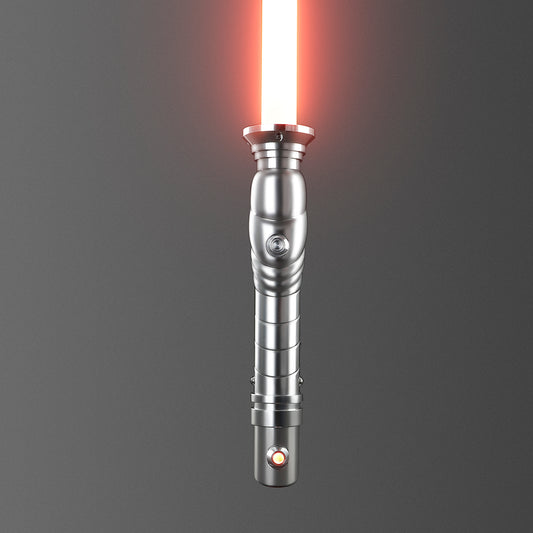
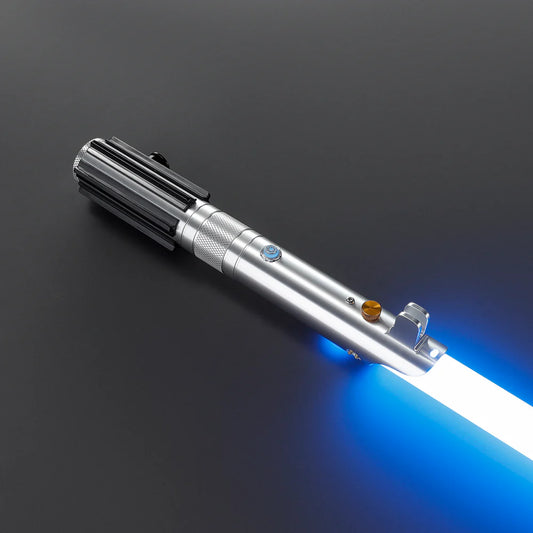
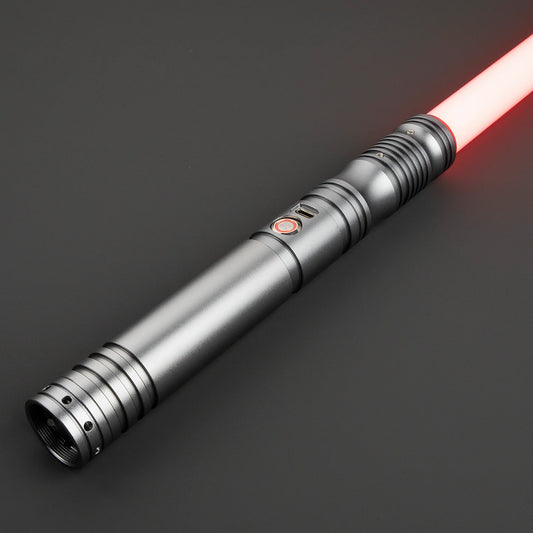
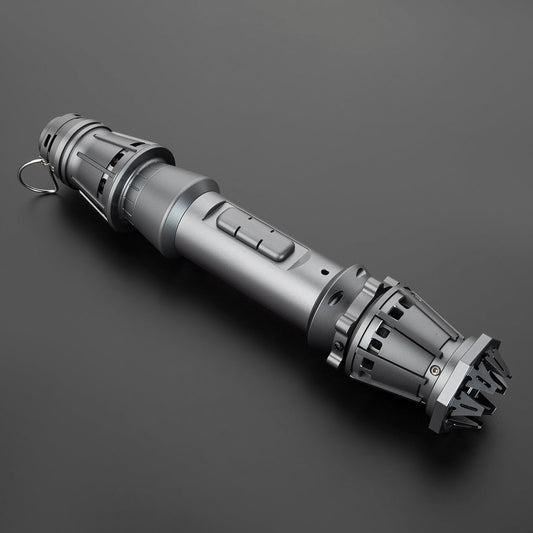
Since you'll handle the hilt, it demands more consideration than normal. Look at the material first when viewing handmade lightsaber hilts. Aluminum alloy is the norm in this activity since its light enough to swing yet robust enough to withstand drops and use. Beyond material, consider grip texture (smooth grips appear elegant but might get slippery mid-swing), length, and hilt weight distribution.
A few things worth checking before you commit to a hilt:
● Does it have replaceable emitters or pommels so you can upgrade without buying a new saber?
● How the weight balance feels, especially for choreography or battling.
● If the threading fits future blade types
● Whether a hilt is modular for updates or fixed to stay as-is.
Try a hilt in person or see a thorough review video before buying. Flattening weight and grip diameter in photos is deceiving.
Choosing the Right Blade
How you use the saber determines blade choice. If dueling or sparring is possible, choose polycarbonate. It flexes instead of shattering when struck, which is important when swinging at another blade. If the saber is only for exhibition, on a stand, in photos, at a con where no one touches it, a thinner, lighter blade is fine, as durability isn't a concern.
The most common mistake is buying a display-grade blade and taking it to a casual sparring session, where it just breaks. Before buying a blade, consider how the saber will be used. A custom saber for display and one for combat are different items, even if they seem the same.
Blade thickness is important yet often overlooked. Thick-walled polycarbonate blades survive repeated impact but increase weight to the swing, changing how the saber feels in choreography. If you regularly clash sabers, thinner blades feel snappier and more responsive but wear out faster. Since blade specs aren't always evident from a product listing, ask your seller what they recommend for your use scenario.
Choosing Blade Color and Effects
Truthfully, this is the enjoyable part. Classic colors like blue, green, red, and purple still look beautiful. However, many builders now want dual-color blades, color-shifting effects, or totally custom RGB combos they can change with a button. Neopixel tech opened this door by allowing near-limitless color possibilities and real-time motion-reactive effects including flicker, ignition flash, and blaster-deflect flashes.
Choosing a single color is no longer enough. An unstable "crackle" flicker effect, smooth pulse-width brightness adjustment, and subtle color transitions provide realism that amazes folks who've only seen single-LED sabers. These nuances may seem small, but they're what distinguish a "fine" saber from a screen-accurate one.
Choosing Sound and Electronics
The soundboard is personality, the hilt the body. A good electronics package produces dynamic hum, clash, swing, and ignite sounds that respond to blade movement, which buys the illusion. Cheaper boards play a static loop regardless of what you do, which is obvious instantly. Newer boards have numerous sound fonts, adjustable volume, and sometimes smoke effects or accelerometer-triggered blaster-deflect sounds.
This is usually where you can spend a little extra on your budget. A decent soundboard improves immersion more than nearly any other modification on a bespoke lightsaber, hilt material included.
How to Choose a Custom Lightsaber Hilt
The right hilt depends on how you'll use it, your budget, and what you like about it. If dueling, choose a grip that comforts over extended sessions and internals that can withstand repeated hits. You can choose something intricate and exquisite that wouldn't last as long if it's mostly going to sit on a stand and be viewed (50% of our customers are this kind of collector).
Modularity matters more than beginners think. Many start with a basic custom lightsaber setup and expand when price allows, adding a soundboard or blade. Choose a hilt intended for upgrades to avoid buying a new saber every time you want something better. Handling a couple hilts in person or watching unboxing videos is worth it because grip diameter and balance feel different in your hand than on a screen. Take your time. You'll touch this area of the saber every time you use it, so don't hurry to the "fun" elements like color and sound.
Choose a Baselit or Neopixel Lightsaber?
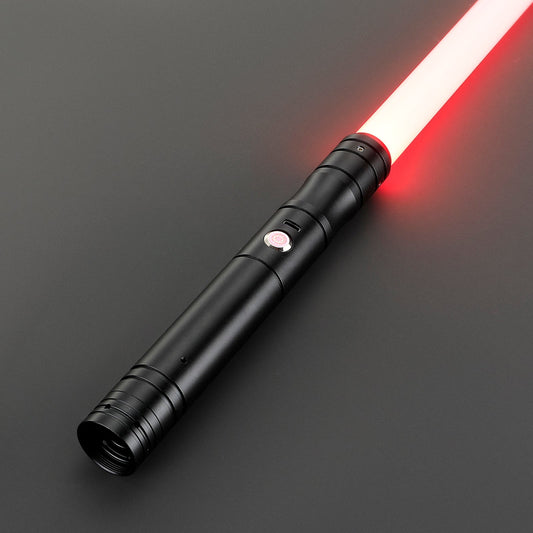
This is our most often asked question, and the "right" response depends on what you value. One LED at the base of the hilt illuminates a polycarbonate blade to give a clean, steady illumination in baselit sabers. They're cheaper, easier to maintain, and a good starting point if you want something reliable without spending a lot of money.
Neopixel sabers perform differently. Fancier things, realistic flicker, seamless color blending, segmented colors, and blade effects that respond in real time to movement and impact are achieved by using a strip of individually programmable LEDs along the complete blade length. Since the LED strip inside the blade requires more care than a Baselit configuration, the cost and delicacy are higher. Neopixel is worth buying if you don't care about money and want the most screen-accurate, feature-rich experience. Baselit remains a reliable and attractive option without the high price tag, and many experienced collectors retain at least one in their rotation.
Best Custom Lightsabers for Beginners
Newbie here? Starting with the most expensive, feature-packed build is unnecessary. We'd argue against it. Beginners should choose something that balances quality, convenience of use, and pricing so they can learn how to care for and manage a saber before investing in expensive improvements.
A few things worth looking for in a first saber:
● Baselit starts sabers with aluminum hilts and several sound fonts.
● Easy-to-use ignition, color, and volume buttons.
● The mid-length blades are adaptable for light dueling and look fantastic on display.
● Budget-friendly kits with impact-resistant polycarbonate blades—don't omit this.
● Pre-built options for those who don't want to touch soldering irons or wiring diagrams.
Before moving on to more sophisticated topics, start here to get accustomed to charging habits, blade care, and electronics behavior over time. When you know what features matter to you, not what looked nice in a video, you can invest in a more serious custom lightsaber build.
Best Custom Lightsabers for Collectors
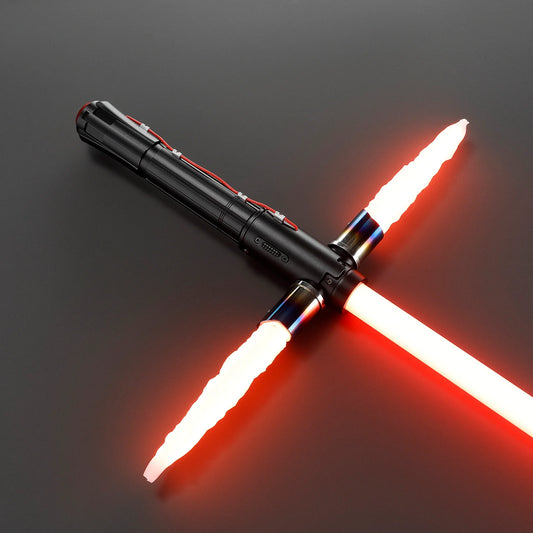
Collectors value intricacy, realism, and craftsmanship over simplicity. These constructions have elaborate greeble work, hand-finished metal hilts, superior Neopixel blades, and several replaceable sound fonts from film and TV sabers. Many professional collectors now view this as functional art that lights up and hums rather than a "prop".
Smoke emitters, motion-sensitive blaster-deflect effects, and premium Proflex or Neopixel boards with dozens of sound fonts are common in high-end projects. This demographic also likes limited runs, numbered editions, and brass or stainless steel hilts. Look for brands with a reputation for precision machining and attention to detail when buying a collector-grade personalized lightsaber. These builds last for years and are impressive centerpieces.
What Sets a Collector Build Apart?
The difference between a "nice" saber and a collector piece is usually tiny nuances you won't see in a thumbnail photo. Hand-polished emitter grills, custom-etched pommels, and soundboards with a character's saber typeface. Collector-grade constructions cost extra since these details take time and talent to perfect; hence, serious collectors are ready to pay more. Build toward this level slowly, compare builders, ask for close-up images of past work, and ask questions regarding materials and machining before committing your funds.
Caring for Your Custom Saber after the Build
After your saber is made or delivered, the job continues. A handcrafted lightsaber can look and sound as wonderful as the day you lit it with regular upkeep. Basic maintenance is simple, but neglecting it is the fastest way to ruin a wonderful build.
● Keep the battery charged within your electronics manufacturer's recommended range and don't let it drain completely.
● Clean the blade after dueling, especially if you dueled outside or in dust.
● Keep the saber in a case or stand to avoid scratching the emitter or pommel.
● Regular swinging can loosen minor components, so check screws and threading regularly.
● Avoid sharply bending Neopixel blades since the inside LED strip is more sensitive than expected.
● Treat maintenance as an extension of building, not an afterthought. Builders who get years out of a saber usually spend five minutes checking on it every few weeks, not after anything breaks.
Bringing Your Custom Lightsaber to Life
Building the ideal saber takes time and starts with researching your options, not just buying the first thing you see online. Whether you choose classic custom lightsaber hilts or cutting-edge Neopixel lightsabers, researching each piece pays off. From first-timers to seasoned collectors, the trend is always the same: consumers who take their time picking components are satisfied with the finished project.
Baselit lightsabers are a perfect entry point if simplicity and reliability are more important than dazzling effects. They function well without adding complexity or cost. If you like competition or performance, focus on custom dueling lightsabers with strengthened hilts and heavy-duty blades that can withstand repeated impacts during sparring without breaking. There's no "correct" way, simply the one that meets your hobby goals.
Ready to start or want to explore before committing? Check out our best-selling lightsabers at BM Lightsabers. We have beginner-friendly kits and premium collector-grade pieces for folks with a shelf full of sabers who know what they want. No matter where you are, we're pleased to assist you in choosing a build that feels like yours rather than simply another saber.