Hilt Construction and Blade Type
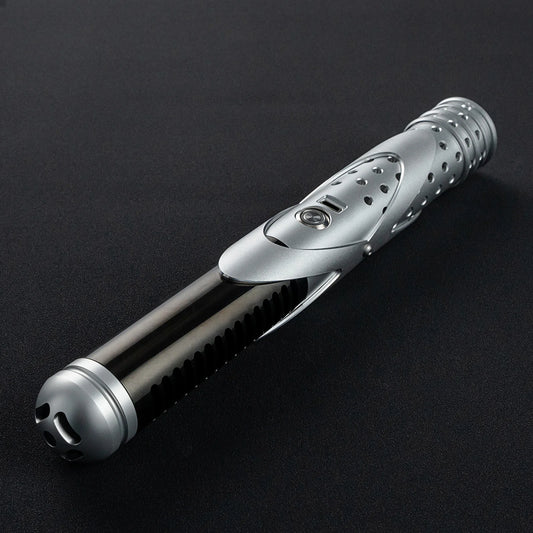
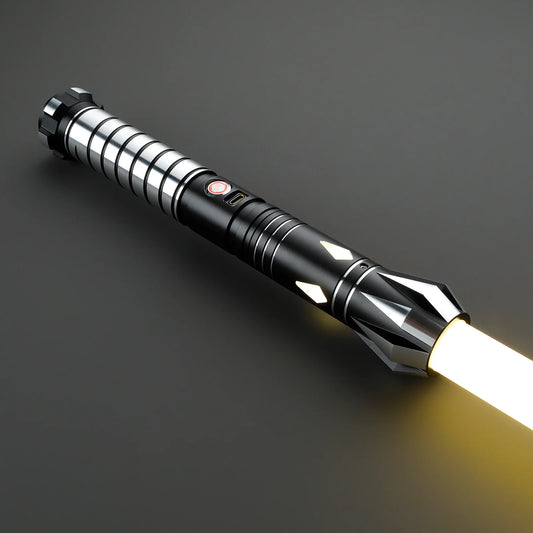
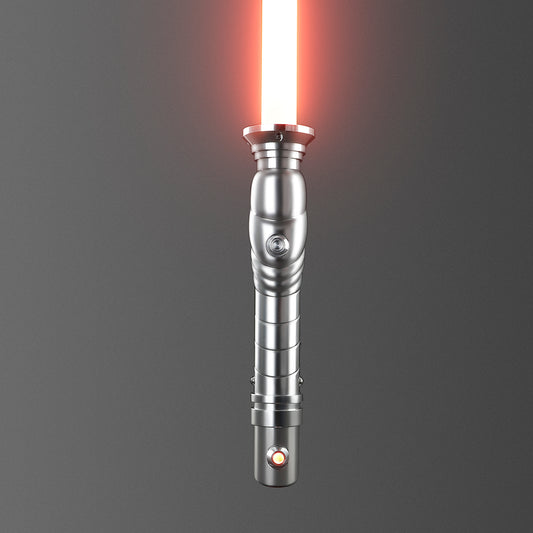
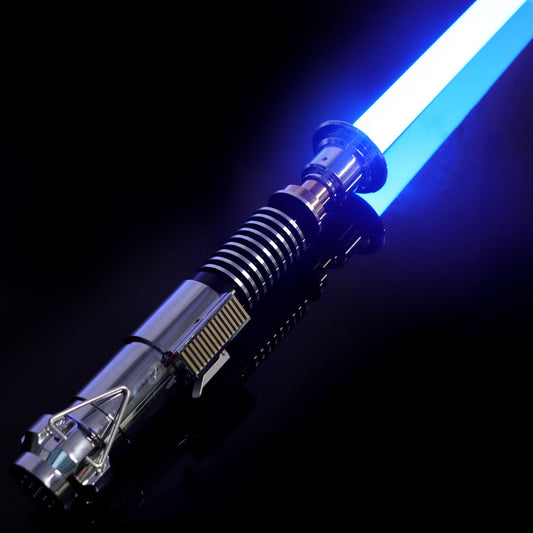
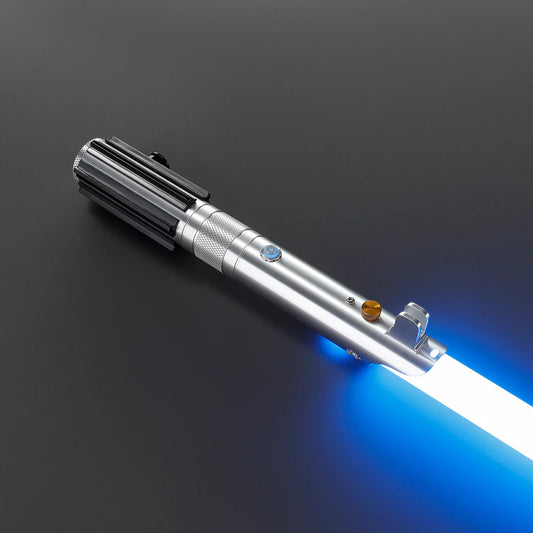
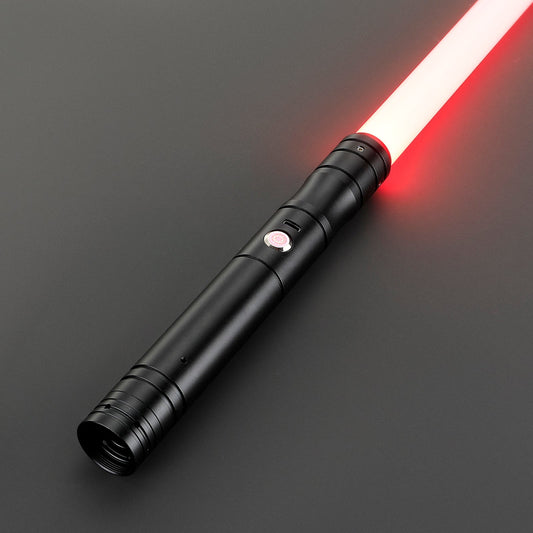
Saber hilts are their foundation. Most quality builders use aluminum, which feels strong and premium without being heavy, while collector-grade parts may use stainless steel or brass. Internal architecture is equally important as external for battling. The chassis of a good hilt holds the battery, speaker, and soundboard securely so nothing rattles after a heavy hit. Threaded connections should be tight, and the blade socket reinforced because it receives the highest stress. The blade type is the other factor. The wall thickness, diffusion, and lighting source of most sabers' polycarbonate tubes determine their impact behavior. Thinner walls look sleeker but aren't as durable as thicker ones. A saber that feels balanced, looks authentic, and performs well session after session has a sturdy hilt and a blade that matches your fighting style.
Durability, Grip and Handling
Real bespoke dueling lightsabers are durable, not cosmetic. Strong blade plugs, pommels, and fasteners are needed for a dueling saber to withstand repeated blade-on-blade contact. Grip and handling are crucial since a saber you can't control will fall. Textured or ribbed hilt portions, knurled metal, and well-placed grip rings help you hold comfortably over long sessions. Ergonomics lessen fatigue so you can focus on form rather than fighting your equipment. Hilt length determines whether you can use one hand or two. Sword handling covers how it feels when moving. A well-balanced build enables you to switch from high guard to low cut without struggling. When customizing your saber, try how the hilt fits in your hand, how your fingers wrap around it, and whether the activation button is simple to reach without unintentionally pressing it during a spar.
Electronics and Intended Intensity of Combat
Soundboard, speaker, battery, and LED system decide how your saber sounds, lights up, and survives movement. Swings, clashes, blasters, and numerous sound fonts and color changes are supported by modern boards. Because unsecured wires and exposed boards break quickly, dueling requires a secure internal arrangement. Long sessions require reliable battery power. Then comes the most honest question: how hard will you fight? Light choreography, stage presentations, and sparring need little saber work. All-out contact requires everything. Your construction should match your intensity to avoid overspending and disappointment. Light battle sabers are not good training swords, while hefty contact swords may be too harsh for casual fans. Be upfront about your goals and let them lead your customization choices.
What Makes a Lightsaber Suitable for Dueling?
An effective dueling lightsaber is durable, comfortable, and attractive after continuous use. Not all glowing sabers are made for that. Before buying, evaluate seven practical features for suitability to save money and fuss. Consider this list your pre-purchase checklist for personalized dueling lightsabers.
● Durable blade
● Hilt build
● Blade length
● Weight and balance
● Grip
● Electronics
● Combat type
Blade Durability, Hilt Construction and Blade Length
Since the blade suffers the most abuse, check its durability first. Thicker polycarbonate tubes crack less easily than thin ones, and Baselit blades are cheaper and easier to replace than pixel blades. A strengthened blade socket, robust chassis, and non-flexing metal elements should mirror that hardness in the hilt. Blade length, the third factor, is often disregarded. Longer blades seem dramatic, but they add leverage, which stresses the blade plug and slows saber control. Duelists choose 32–36 inches to balance reach and maneuverability. Shorter blades are faster and more forgiving, while longer ones offer more reach but less control. Match the blade length to your height, arm length, and fighting style, and make sure your hilt can properly handle the leverage a longer blade provides.
Weight, Balance and Grip
Weight and balance silently determine whether a saber feels like an odd stick or an arm extension. Too heavy a saber tires you quickly, while too light one seems weak and unresponsive. Balance matters more than weight. Blade-heavy sabers pull forward and strain your wrist, while hilt-heavy ones seem slow in quick shifts. The balancing point should be near the hand for easy pivoting, parrying, and recovering. Grip links everything together. Ribbed or knurled hilts prevent slippage, and a grip that fits your hand size provides you confidence throughout swift exchanges. Consider how the hilt feels after 20 or 30 minutes of practice, not just the first few seconds. A comfortable, well-balanced saber decreases injury risk, enhances technique, and lets you enjoy the duel instead of fighting your gear.
Electronics and Type of Combat
Dueling strains electronics; therefore, a secure internal arrangement is crucial. A well-mounted soundboard, protected speaker, firmly seated battery, and clean cabling that won't disconnect during a violent crash are essential. Popular cores like Xenopixel and Proffie offer many sound fonts and effects, but the perfect choice depends on your needs. Every choice should be based on your combat style. Sport-style sparring rewards durability, whereas choreographed stage fighting rewards visuals and music. Fans sometimes use one saber for demonstrations and another for contact practice. Hard-hitting fighters should use durable swords and simple illumination. You can prioritize lighting effects and blade brightness for performance, filming, or a show. Honest answers about your fighting style can help you choose a build and avoid costly blunders.
Neopixel vs Baselit Lightsabers: What's the Difference?
The difference begins with the light source. Baselit lightsabers use a bright LED in the hilt to illuminate a diffused blade. Neopixel lightsabers have a strip of individually controlled LEDs inside the blade. Understanding how just one design option affects brightness, effects, weight, durability, battery life, and pricing is crucial to choosing well.
The Neopixel Experience
The closest thing to a cinematic experience is a bespoke Neopixel lightsaber. The blade can burn from base to tip like a beam and retract when powered down since its LEDs are individually addressable. Neopixel installations can provide pulsating effects, color shifts, flicker, and dramatic clash and blast animations that Baselit blades cannot. The glow is brighter and more realistic, looking great in low light and on camera. Trade-offs exist, though. Neopixel blades have fragile electronics, so forceful hits can destroy them, and replacement blades cost multiple times more than Baselit blades. Extra LEDs drain battery life. This makes bespoke Neopixel sabers best for cosplay, demonstrations, photography, collecting, and light-contact sparring, not full-force fighting.
The Baselit Advantage
Heavy dueling works best with baselit lightsabers. Since the LED is in the hilt, the blade is a hollow diffusion tube, lighter and tougher than a pixel blade. When a Baselit blade splits, changing it is cheap, so you can train without pricey electronics. Baselit sabers have smooth swing noises, flash-on-clash, different colors, and sound fonts. Long practice sessions and conventions benefit from better battery life. Visual trade-off. Baselit blades fade from the base outward rather than ignition sweep, and thus cannot match pixel blades' dramatic effects. For duelists who value durability over appearance, those concessions are acceptable. Baselit builds underpin most of the intense sparring community.
Quick Comparison
Source of light: Neopixel employs a blade LED strip; Baselit uses a hilt LED.
Durability: Baselit is tougher; Neopixel is softer.
The effects: Baselit has simpler effects than Neopixel's igniting and pulsing.
Cost: Neopixel blades cost more to replace than Baselit blades.
The battery: Neopixel uses more power; Baselit lasts longer.
How to Choose Between Them
The choice depends on your priorities. Baselit lightsabers are ideal for frequent duelists who hit hard and seek a cheap replacement. For cinematic looks, photography, display, and light choreography, a custom Neopixel lightsaber will deliver unequaled visual impact. Many experienced fans use Baselit for contact practice and Neopixel for concerts and collection. Budget matters. Baselit builds are cheaper to buy and maintain, while Neopixel constructions cost more for their technology. Choose a hilt with a modern soundboard that enables pixel output if unsure. Thus, you can start with a Baselit blade and graduate to a pixel blade without replacing the saber. Consider it a journey, not a choice.
Best Custom Lightsabers for Beginners
The greatest handmade lightsaber for beginners forgives mistakes. Durability and affordability are more important than showy effects for beginners who drop sabers, overswing, and misjudge distance. Start with a Baselit saber with a strong aluminum hilt, thick polycarbonate blade, and durable soundboard. It has realistic sound effects, vibrant colors, and adequate durability to practice fundamental forms without worries about scratches. You may study without worrying about pricey maintenance because new blades are affordable. Look for a pleasant grip, moderate weight, and a 32–34-inch blade length that's easy to manage when practicing.
● Choose Baselit for longevity and low replacement costs.
● Control is easier with a reasonable blade length.
● The hilt should have a solid, textured grip.
● Start with an upgradeable soundboard.
Visual effects beginners can enjoy a bespoke Neopixel lightsaber if they treat it gently. Use it for dance, cosplay, photography, and slow, controlled practice. Keep a second Baselit saber for harsher contact. Starting with a hilt that supports both blade types allows you to grow into the hobby without buying a new saber as you advance. You will discover what you like: faster handling, heavier hilts, longer blades, or more dramatic illumination. While staying within budget, your first custom build should educate you on those preferences.
Best Custom Lightsabers for Collectors
Collectors view lightsabers differently. They value polish, hilt design, screen-accurate details, and lighting drama. A personalized Neopixel lightsaber is generally their favorite. A pixel blade on a display stand seems alive with base-to-tip ignition, flawless color transitions, and rich pulsating effects. Machined aluminum, brass, or stainless steel hilts with precise engraving and aged or polished finishes add shelf appeal and value. Collectors respect sound fonts because a good soundboard with movie-style effects enhances the saber experience.
● Focus on hilt finish, materials, and design.
● Neopixel for ignition, retraction, and effects
● Find reliable soundboards with many fonts.
● Display on a stand or wall to protect the hilt.
Collectors value quality over durability. Investing in quality components maintains a saber's polish, soundboard, and blade shiny for years. To safeguard their pixel blade, many collectors carry a Baselit saber for casual swinging. For battery health, clean blades, minimize heat and direct sunshine, and charge periodically. Carefully chosen collector sabers are more than props. It shows your taste, rewards your investment, and looks great when lit for visitors or sitting on the shelf.